How to Pick the Right Dehumidifier for Your Home

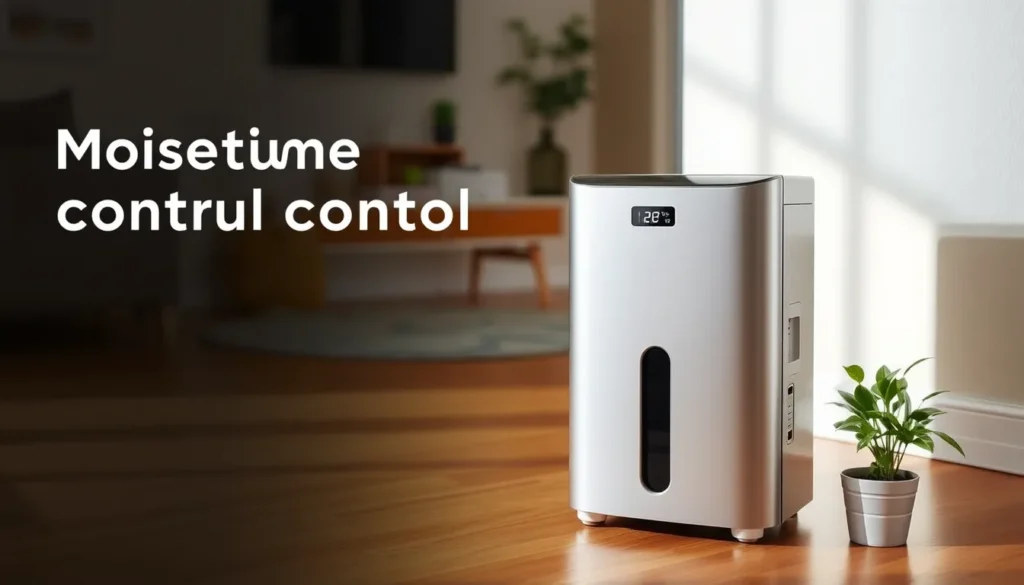
If you are dealing with persistent dampness or condensation, this guide helps you match a dehumidifier to your specific living conditions. It moves beyond generic marketing claims to focus on real-world variables like moisture sources and room geometry.
We break down technical specs such as Pints per day (PDD) and Relative humidity (RH) into practical choices. You will learn how to distinguish between Refrigerant and Desiccant models, ensuring you avoid overspending on unnecessary features.
By the end, you will know exactly what to look for in an Energy Star certified unit that fits your maintenance routine and energy budget.
Understanding Dehumidifier Capacity and Room Size
Dehumidifier capacity is measured in Pints per day (PDD), which indicates how much moisture a unit can remove from the air in a 24-hour cycle under standard conditions. This metric is the primary determinant for matching a device to your specific space. However, square footage alone is an incomplete guide. A damp basement with concrete floors and poor ventilation demands significantly higher capacity than a dry bedroom of identical size.
To select the right unit, assess the moisture sources actively affecting your home. Persistent leaks, high outdoor humidity, or unsealed windows introduce more water vapor than typical household activities like cooking or bathing. In environments with heavy moisture intrusion, you may need to oversize the unit to prevent the system from running continuously at full power, which reduces efficiency and increases wear.
Conversely, using a unit that is too large for a small room causes the Humidistat to cycle the fan on and off frequently. This short-cycling can lead to uneven humidity distribution and unnecessary energy consumption. Start by identifying the worst-affected area. If that room remains damp, consider a unit with a higher PDD rating. Always check the manufacturer’s sizing chart, but adjust upward if your climate is consistently humid or if the space lacks proper air circulation. The goal is to find the balance where the unit maintains your target Relative humidity (RH) without running non-stop.
Refrigerant vs. Desiccant: Which Technology Fits Your Climate?
The core difference between these two technologies lies in how they extract moisture and how temperature affects that process. A Refrigerant dehumidifier uses a compressor and refrigerant coils, similar to an air conditioner, to condense water vapor. This method is highly efficient when the air is warm. Generally, these units perform best when indoor temperatures remain above 65°F (18°C). In these conditions, the unit removes moisture quickly while consuming less electricity, making it the preferred choice for many basements during spring and summer.
In contrast, a Desiccant dehumidifier uses a hygroscopic material to physically absorb moisture from the air. Because this process does not rely on temperature differentials to condense water, desiccant units remain effective even in cool environments where refrigerant models struggle or shut off. However, desiccant technology typically consumes significantly more energy to achieve the same moisture removal, which can increase long-term operating costs.
To select the right type, evaluate your specific indoor conditions rather than just outdoor weather. Check the average temperature in the room where you plan to place the unit. If your basement rarely drops below 65°F, a Refrigerant dehumidifier offers better energy value and lower noise levels. If the space stays cool year-round, a Desiccant dehumidifier prevents the performance drop-off common in refrigerant models. Note that many modern units combine both technologies or feature sensors to switch modes automatically, ensuring consistent Relative humidity (RH) control regardless of seasonal temperature shifts.
Key Features That Impact Daily Use
Once you have selected the right technology and capacity, specific features determine how manageable the unit is day-to-day. The most critical component is a built-in Humidistat. This sensor allows you to set a target Relative humidity (RH) level, such as 45% or 50%. Without it, you must manually monitor the air, risking under-drying that leaves dampness behind or over-drying, which can cause dry skin and respiratory irritation. A reliable Humidistat automates the cycle, turning the fan on only when necessary to maintain your comfort zone.
Water management is the second major consideration. Small tanks require frequent emptying, often multiple times a day in high-humidity environments. For permanent installations, a continuous drain option is essential. This feature connects a hose directly to a floor drain or sump pump, eliminating the need for manual intervention. If your unit lacks this port, check if it accommodates a standard adapter.
Other practical features include Auto-restart, which powers the unit back on after a brief power outage, preventing humidity spikes during storms. Look for adjustable fan speeds; lower settings reduce noise for bedrooms, while higher speeds maximize air circulation in larger rooms. Finally, verify that the unit includes a washable filter. Clogged filters restrict airflow, causing the Refrigerant or Desiccant dehumidifier to work harder and consume more energy. Regular cleaning ensures the Energy Star certified efficiency ratings remain accurate in real-world use.
Energy Efficiency and Operating Costs
Because a dehumidifier runs continuously to maintain your target Relative humidity (RH), its electrical consumption accumulates quickly. Unlike a light switch that you control manually, this appliance operates for hours at a time. This makes energy efficiency a critical factor in determining your long-term operating costs, not just the initial purchase price.
Look for the Energy Star certified label or equivalent efficiency ratings. These standards ensure the unit meets specific benchmarks for water removal per unit of electricity used. An efficient model does not mean it uses less power in an absolute sense; rather, it means it removes more moisture with the same amount of energy. Over months of operation, this difference translates into noticeably lower utility bills compared to older or less efficient models.
Capacity selection also plays a role in efficiency. A unit sized appropriately for your room operates within its optimal range. Conversely, a smaller unit forced to run at maximum capacity to handle a large, humid space will work less efficiently per pint removed. It will cycle more frequently and consume more energy for the same result. Therefore, choosing a slightly larger unit for a heavily humidified area is often more cost-effective than under-sizing the device and letting it run constantly at peak load.
Consider the type of technology as well. While Refrigerant dehumidifier models are generally more energy-efficient in warm, humid conditions, they lose efficiency in colder temperatures. A Desiccant dehumidifier may be more efficient in cooler climates despite using a different mechanism. Matching the technology to your specific climate ensures the unit operates near its peak efficiency, keeping your monthly energy costs predictable and manageable.
Placement and Maintenance for Long-Term Performance
Placement determines how effectively the unit circulates air through the room. Position the dehumidifier in a central location to maximize airflow, ensuring it is not blocked by furniture or curtains. Keep at least a foot of clearance on all sides to prevent the internal fan from drawing in restricted air. Avoid placing the unit in direct sunlight, as heat can strain the compressor and reduce its ability to condense moisture efficiently.
Maintenance is critical for sustaining performance and preventing health hazards. Dust accumulates on the intake filter quickly, especially in homes with pets. A clogged filter forces the unit to work harder, reducing its effective Pints per day (PDD) capacity and increasing energy consumption. Clean the filter weekly during peak humidity seasons, or more frequently if you notice airflow dropping.
Also inspect the drain hose if you are using continuous drainage. A kinked or clogged hose can cause water to back up into the unit, leading to internal leaks. If using a tank, monitor the water level regularly. An overflowed tank will shut off the unit, allowing relative humidity (RH) to rise again. Neglecting these tasks creates a damp environment inside the machine itself. This stagnant moisture promotes mold growth on internal components and fans, which can then be blown back into your living space. Regular cleaning and proper placement ensure the dehumidifier remains a reliable tool for controlling indoor moisture rather than a source of air quality issues.
